










Low vs Medium vs High Impact Sports Bras for Teens: What the Labels Really Mean

A back handspring, a dead sprint down the soccer field, a two-hour dance block: each asks something different from a girl's sports bra. The label medium impact sports bra is common, but support tiers are not standardized across brands. Fit and the actual activity matter far more than the word on the tag.
Here is what medium impact covers, how it compares to low and high, and how to match support to a teen's real movement.
Medium Impact Defined
Support levels sound technical, so here is the plain version. Low impact means a gentle hold for light movement and all-day comfort. High impact means the firmest hold for lots of up-and-down motion. Medium impact sits in the middle, offering a noticeable hold for moderate activity. That middle ground covers a surprising amount of a teen's week.
What is a sports bra actually controlling? Movement in several directions, not only the obvious bounce. During activity, breast tissue shifts up, down, and side to side at once. The right support level cuts that range down, which keeps a girl comfortable and focused instead of adjusting her top every few minutes.
A simple guide can help match the activity to the right support level:
- Jumping, sprinting, or constant running usually calls for high impact.
- Biking, dance practice, PE circuits, and weight room days often land in medium impact.
- Stretching, yoga, and walking tend to need low impact support.
One reality check on size. The same medium impact bra can feel like far less support on a fuller chest. If a girl reports discomfort or notices a lot of movement, the level, structure, or fit needs to change, regardless of what the label promises.
When Low Impact Is the Right Call (and When It Isn't)
Low impact gets a bad rap, as though it signals a girl who isn't working hard enough. Light support actually fits a huge slice of a teen's week, and choosing it on purpose is a comfort decision rather than a compromise.
Picture the ordinary rhythm of a school day: sitting through classes, a stretching warm-up, a lunchtime walk, a light PE rotation, then recovery hours on the couch after a hard practice. None of that involves repeated jumping or sprinting. For yoga, dog walking, lounging, and easy movement days, a gentle hold is exactly what the body wants. Low impact feels lighter against the skin, wears easily for hours, and skips the thicker panels and clips a higher-support bra adds.

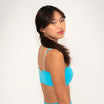
A few features separate a good low impact pick from a forgettable one: a soft band that stays put instead of creeping up, smooth seams that lie flat under a fitted tee, and breathable fabric for warm classrooms. For the many teens who dread any hint of show-through, coverage matters as much as the hold. The Bleum Racerback is seamless and reversible, with a thicker lining than the Bleum Bra for extra support and coverage, adjustable straps, and a tag-free finish. It is 90% polyester and 10% spandex, $24, in sizes 6 to 24.
One thing to keep in mind is that reaching for low impact during a bouncy sport because it feels comfiest usually backfires, since comfort and control are different jobs. A gentle bra on the volleyball court leaves a girl tugging and distracted, the exact problem support is meant to solve.
Best Activities for Medium Impact Support, and the Construction That Delivers It
Medium impact is the workhorse tier where most of the week lives. It holds more firmly than a low impact bra, yet skips the rigid compression and locked-down panels of a high impact design. That makes it the right match for moderate movement: motion with some bounce, plenty of reaching and twisting, but no relentless pounding.
The activity list runs long: dance practice heavy on choreography, cycling and spin classes, strength training, general PE blocks, weekend hiking, volleyball drills on a non-jumping day, and cheer sessions built around routines rather than tumbling. Each asks for steady hold without the squeeze of maximum support.
A bra earns the medium label through construction, not a word on the hangtag. Three cues signal the real thing. The underband sits firmer than a low impact style, since the band does most of the anchoring work. The straps hold their shape instead of stretching loose after a few wears. Inside, a layer of lining cuts the side-to-side shift that leaves a girl resettling her top mid-set.

Genuine medium support should feel snug and secure, with no strain to draw a full breath. No pinching at the ribs, no band flipping or rolling, no strap digging into a shoulder. A ten-second bounce in the fitting room sorts keepers from pretenders. For a teen who lives in this tier most days, the Bleum Active Bra is built to give extra support for competing and playing. It uses soft, moisture-wicking performance fabric, is double-lined for smooth coverage, has adjustable straps, and is tag-free with minimal seams, so it sits cleanly under a shirt, jersey, or tank. It is 90% polyester and 10% spandex, $24, in sizes 7/8 to 22.
Fit is what turns these features into real support, and the guide to how a sports bra should fit walks through it from band to straps.
High Impact vs Medium Impact Sports Bra
Can a girl run in a medium impact sports bra? That single question sends more parents searching than almost any other, and the answer depends on two things: her chest and the run.
Start with what changes between the tiers. A high impact bra is built for the most motion control. The band runs stronger and sits firmer, the construction turns more structured, and many styles add adjustability so the hold can be dialed in. A medium impact bra balances that control with flexibility and all-day comfort. It handles bounce with some reaching and twisting, but it is not made for the relentless pounding of a hard run.
That pounding is the deciding factor. Running, HIIT, jump rope, and sports built on sprinting and sudden stops send breast tissue through repeated up-and-down motion for minutes at a stretch. High impact becomes the safer bet. The stronger band and firmer structure cut the bounce that leaves a girl sore, self-conscious, or tugging at her top between intervals.
So can she run in medium? Sometimes. A smaller-chested teen heading out for a short, easy jog may feel perfectly fine. But the moment there is noticeable movement or any discomfort, that is the signal to step up the support rather than push through. When in doubt, more support wins for any high-bounce activity.

One worry holds parents back: that firmer support means strapping a kid into stiff body armor. It does not. The cues that make higher support bearable matter at every tier: smooth materials against the skin, seams that lie flat, and a band that stays anchored without pinching the ribs. The Lotus Sports Bra is Bleuet's high-impact option, built for running, gymnastics, HIIT, and game day.
It has a wide, supportive underband for high-impact hold, adjustable straps with a J-hook for a racerback option, a built-in lightly padded spacer-mesh layer instead of removable pads, and a tag-free finish with minimal flat seams, all in a sweat-wicking performance fabric that is soft enough to wear all day. It costs $36 in sizes 12 to 24.
Even the firmest band fails if the fit is off, which is where the fit test comes in.
How to Tell if a Sports Bra Fits: A 60-Second Test Any Teen Can Run
One rule cuts through every support label on the hangtag: the band does most of the work. Not the straps, not the fabric. Once a girl understands that, checking fit becomes quick and repeatable, no measuring tape required.
The whole thing takes about a minute in a bedroom. Four checks, in order:
- Band check. It should sit level all the way around, snug but not crushing. Raise both arms overhead. If the band rides up toward the shoulder blades, it is too loose.
- Strap check. Straps should feel secure without carving into the skin. They position, they do not hold the whole load. If they dig, the band below is likely slacking off.
- Movement check. Jog in place or bounce for ten seconds. Her chest should move with her body as one unit.
- Comfort check. Take a deep breath and twist side to side. No sharp pressure points, no pinching at the ribs, no seam cutting into an underarm.
When something feels off, the symptom points to a cause. A band that creeps up is too big or too soft to anchor. Straps that dig in usually mean a band and support mismatch, so tightening them only shifts the ache higher. Gapping or wrinkling in the fabric signals the shape is wrong for her frame, or the size needs adjusting. For the full walk-through, the guide to how sports bras should fit breaks down each zone in detail.
One detail matters for a certain kind of wearer. Some girls notice a scratchy tag or raised seam long before they notice support, and that distraction can sink an otherwise well-fitted bra. For a teen sensitive to those details, construction cues deserve the same attention as the band.
How Bleuet Designs Bras for Tweens and Teens (and How to Choose by Impact Level)
Most activewear scales down a women's design and calls it a day. Bleuet works the other way, building for a growing girl from the ground up: comfort, confidence, and genuine support without the women's-department styling that makes a changing body feel on display before it is ready.
That shows up less in any single fabric and more in how a bra meets skin over a long day. Seams are kept minimal. Wires are gone entirely. Tags are gone too, and finishes are picked so a girl forgets the bra is there. Bleuet was created by a mom, and these are the details a kid actually complains about.
Choosing within the range follows the same impact logic. On low-impact days, the priority is softness and a light, reliable hold, everyday coverage a girl barely registers under a tee, which is the Bleum Bra and Bleum Racerback.
Medium-impact days call for a firmer band and a secure feel that still breathes through a long block of movement, which is where the Bleum Active Bra comes in. High-impact days full of running and jumping shift the goal toward more structure and a locked-in feel, which is the Lotus Sports Bra.
Coverage is its own question for many teens, separate from support. For a girl who wants smoothing under a fitted shirt or a little extra modesty, a sewn-in lined option answers that without tipping into shape-focused padding. The guide to the best padded sports bra for teens sorts through those choices. Because bodies change fast at this age, the 60-second test is worth rerunning every few months.
Ready to Find the Right Support Level? Start Here
Match real activity to genuine hold, and it never needs to feel stressful. Start with the full range of Bleuet bras, built for growing girls without the wires, bulky seams, or rigid structure that can make everyday movement uncomfortable.
Frequently Asked Questions
What is a medium impact sports bra?
A medium impact sports bra offers moderate motion control for moderate movement: enough hold for activities with some bounce, reaching, and twisting, but short of the firm compression a hard run demands. Support labels are not standardized across brands, so fit and the actual activity matter more than the word on the tag. Match the hold to the motion, then check the band.
What does "medium impact" mean for teens specifically?
For a growing girl, a medium impact sports bra has to double as a school-day comfort piece and a practice workhorse. Add in a body that keeps changing, and the goal becomes a bra that feels secure, breathes through long blocks, and never puts a changing shape on display. Rechecking fit every few months keeps that comfort steady as a teen grows.
High impact vs medium impact sports bra, how should a parent choose?
Let the activity decide. Jumping, sprinting, and constant running call for high impact, while strength training, cycling, dance, and general PE usually land in medium. The simplest tiebreaker is comfort: if a girl reports noticeable movement or any discomfort, that is the signal to step up the support rather than push through.
Can a teen run in a medium impact sports bra?
Sometimes. A smaller-chested teen heading out for a short, easy jog may feel perfectly fine in medium support. The moment there is bounce, soreness, or any distraction, high impact is the safer call. For hard runs, intervals, or sprinting sports, more support wins every time.
What is the best medium impact sports bra for a teen?
The best one stays put through movement, anchors with a comfortable band, never rubs at the underarm, handles sweat, and passes a ten-second bounce test in the fitting room. For a growing girl, a teen-focused option without the women's-department styling makes the difference. The Bleum Active Bra pairs moisture-wicking performance fabric with extra support for competing and playing, and the guide to how sports bras should fit confirms the right one before a season starts.
Leave a comment