








Undershirt vs First Bra: Which Comes First?

A tween who wants a smooth layer under a white tee and one who wants a little support after a growth spurt are asking two different questions. That gap between coverage and support is where families get stuck, and a girls undershirt sits right at the center of it.
The choice sorts into three clear paths: an undershirt, an undershirt with built-in support, or a first bra. The right starting point depends on what each option is built to do.
1. Start With the Job, Not the Milestone
The debate eases once the question shifts from "is she old enough?" to "what does the outfit need to do today?" Naming a garment's job removes most of the second-guessing.
Three jobs cover nearly every situation a tween runs into:
- Warmth and layering: an extra layer under a stiff uniform, a scratchy sweater, or a thin winter top.
- Modesty and opacity: smoother coverage under thin or light-colored fabrics.
- Support and comfort in movement: a little hold for PE, dance, recess, or a long walk to school.
The decision rule is short. When the main goal is layering, an undershirt does the work. When a girl wants opacity plus a touch of hold, an undershirt with built-in support fits the day. When she wants steady, reliable support, especially during activity, a first bra becomes the better call.
Real days make this concrete. On uniform day, a soft undershirt takes the itch out of a rough collar and adds warmth. On white-tee day, the goal is coverage, so a smoothing layer that hides what a thin fabric reveals earns its place. On PE day, jumping and sprinting call for support that stays put, which points toward a first bra or a sports style built for motion.
One expectation worth setting early: most girls end up using more than one of these, depending on the outfit and the activity. A drawer might hold an undershirt for chilly mornings and a supportive option for practice, and that mix is completely normal rather than a sign of indecision.
2. Match the Undershirt Style to the Top She's Wearing
An undershirt earns its keep at three jobs: layering under stiffer fabrics, adding a soft barrier against scratchy seams, and smoothing coverage under thinner tops. What it does not do is provide true support, so a girl who wants hold during movement is better served by a bra built for it. Knowing that boundary keeps the choice focused on style, not support.
From there, the top decides the shape. Three cuts handle most of a school wardrobe:
- Cami: the pick for wider or scooped necklines, since thin straps tuck neatly under most tops.
- Tank: more shoulder coverage, a natural fit under sweatshirts and uniform polos where a wider strap stays hidden.
- Short sleeve: the answer to scratchy sweaters and structured uniform shirts, adding a soft buffer where seams and stiff collars rub.
Fit matters as much as cut. A quick scan settles it: the fabric should lie flat with no bunching at the waist or chest, straps should hold their place instead of sliding down a shoulder, and armholes should sit clean without rubbing. Any bunching or slipping usually means the size is off.
One honest caution: under a genuinely thin or see-through top, even a well-fitting undershirt can leave faint lines or fail to fully smooth what shows through. That is the moment a built-in support layer makes more sense.
3. What a Built-In Bra Undershirt Does (and When It Fits Best)
A plain undershirt runs out of road at a thin top that needs more than smoothing. A girls undershirt bra answers that gap. It is an undershirt with an inner layer, usually a shelf-style panel sewn inside, built to deliver modesty plus a gentle bit of hold in one garment.
That built-in layer earns its place in a few specific situations. Under thin tops or a light-colored school uniform shirt, the extra layer adds coverage a single tee cannot. During early development, when a traditional bra feels like too much too soon, it offers a softer on-ramp that still looks and feels like an undershirt. On busy mornings, it trims the routine to one piece instead of a tank plus a separate bra.

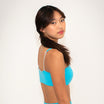
Bleuet's Bleum Camisole is this garment. It has a shelf bra sewn in for extra coverage and support, adjustable straps, minimal seams and no tag, in a lightweight heather fabric of 90% polyester and 10% spandex. It is $26 in sizes 6 to 22, and it doubles as sleepwear.
Expectations should stay honest. A shelf layer gives light support, the kind that suits a slow school day or an easy afternoon. For PE, dance, or anything higher in impact, a dedicated bra built for motion holds up better through the hard parts.
For a closer look at everyday options, the camisole with built-in bra guide breaks down the choices, and the best shelf bra cami for tweens and teens roundup helps narrow the list.
4. Signs a Girl Is Ready for Her First Bra
There is no single correct age that says a first bra belongs now. Readiness has less to do with the calendar and more to do with comfort and what a girl does through an ordinary day. Two friends the same age can land in different places, and both are perfectly on track.
A handful of everyday signals tend to point toward a first bra rather than another undershirt:
- A single-layer undershirt no longer gives the consistent coverage she wants under her tops.
- Movement feels uncomfortable during PE, dance, or a fast walk between classes.
- She tugs and adjusts her top all day to feel settled.
- She would rather keep a separate support layer so her undershirt can stay purely for outfits and warmth.
When two or more show up regularly, an undershirt is being asked to do a job it was never built for. A shelf cami stretches only so far before support becomes the real need.
The conversation matters as much as the garment. A low-pressure prompt keeps it easy: "What would make mornings easier?" That question lets a girl name the pinch point herself, whether it is coverage, comfort, or simply wanting a layer of her own.
For a deeper look at timing, Bleuet's guide on when a daughter should start wearing a bra walks through the signs without turning them into a countdown.
5. How Bleuet Solves the Comfort Complaints Tweens Actually Have
The bras that end up sitting unworn in a drawer usually have the same problems: scratchy seams, tight bands, itchy tags or awkward bumps showing through clothes. Bleuet designs for the in-between stage, when a girl wants real comfort and quiet confidence without a women's-store feel. Every design choice traces back to a complaint a tween would actually voice.
Three things are worth judging any first bra against. Comfort centric design comes first: wire-free shaping, minimal seams, ultra-soft fabric, and no tag. Practicality comes next, meaning it survives back-to-back school days, sports practices, and laundry cycles without losing its shape. Modesty rounds it out, with coverage that stays age-appropriate rather than overdone.

The Bleum Bra checks each box as a first-bra pick: reversible, double-lined, wire-free, in 90% polyester and 10% spandex, at $24 in sizes 6 to 24. Sizing is T-shirt simple, so a girl picks the number she already wears in a top.

Activity level fine-tunes the choice from there. Everyday school days suit the Bleum Bra, while practice and dance point toward the Bleum Active Bra: double-lined, tag-free with minimal seams, in soft moisture-wicking performance fabric with adjustable straps, at $24 in sizes 7/8 to 22.
Three girls tend to land here: the comfort-first tween who wants basics that disappear under a tee, the sensory-sensitive girl who cannot stand scratchy tags, and the active girl who needs support that keeps up through motion. None of this is either-or forever, since an undershirt can still layer over or under a bra depending on the outfit and the day.
6. Choose a Next Step and Try It Under Real Outfits
The decision usually narrows to one of three destinations, and the fastest way forward is to match the path to the question a family is actually asking.
For a girl ready for an everyday first bra, Bleuet delivers the soft, wire-free basics built to disappear under a school-day tee. Starting here keeps the choice simple when support is the goal.
For families weighing a smooth layer with light, bra-like coverage, the Bleum Camisoles collection shows the shelf-bra cami in a range of colors, and the camisole with built-in bra guide explains how a shelf layer handles modesty and gentle hold before any size lands in the cart.
For anyone wanting the closer comparison, the best shelf bra cami for tweens and teens roundup lines up the everyday options side by side.
One item is plenty to start. Picking a single style, living in it for a few real days, then adding a second once a favorite emerges beats buying a full drawer up front.
A short trial run at home settles most doubts tonight:
- Slip it on under the most-worn top in the rotation.
- Move through a few real motions: reach overhead, twist side to side, bend down.
- Wear it for ten minutes and check that the straps and band stay put, with no digging or sliding.
Pass those three, and it has earned a place in the drawer.
Frequently Asked Questions
Is an undershirt the same as a first bra?
No. An undershirt is built for layering, warmth, and smoother coverage under thin tops, while a first bra is built to hold and support a developing body during movement. An undershirt shines on uniform days and under white tees. A first bra earns its place once a girl wants steady, reliable support, especially during PE or dance.
Is a girls undershirt with a built-in bra enough on its own?
For everyday coverage and light hold, often yes. A shelf-style layer handles modesty and a gentle bit of support through a slow school day, and many tweens find it is all they need for months. The simple test: does it stay comfortable and in place while she reaches, twists, and moves? If it shifts or feels like too little during activity, a dedicated sports style is the better match.
What should an undershirt or built-in support cami feel like when it fits right?
It should sit flat against the body with no bunching at the chest or waist. Straps stay put instead of slipping off a shoulder, and armholes lie clean with no rubbing. Under an everyday top it should feel like nothing at all. Digging, sliding, or a band that leaves a mark by afternoon all signal the size is off.
How do I keep camis and bras from shrinking or feeling scratchy after washing?
Gentle cycles and lower heat protect soft fabrics and elastic. Skipping high-heat drying whenever possible keeps a band from tightening and a shape from warping. Rotating a few pieces rather than wearing one favorite on repeat spreads out the wear, so each garment lasts longer and stays comfortable through more school days.
What if she wants coverage at school but isn't ready for a bra yet?
That feeling is completely normal, and there is a comfortable middle ground. An undershirt with a built-in shelf gives modesty and a touch of hold while still looking and feeling like a plain layer, no bra required. The easiest way to test it is at home: slip it under a uniform top or a favorite tee and check that nothing shows through. For help reading the timing without any pressure, Bleuet's guide on when a daughter should start wearing a bra walks through the signs at her pace.
Leave a comment