










Aerie Bralettes vs Bleuet: Why Women's Sizing Fails an 11-Year-Old

An eleven-year-old often lands in an awkward gap. Kids' sizes have run out, and the obvious next stop is a mall brand with soft, simple bralettes. Aerie is usually the first name suggested, and the fit reads as if it were built for someone three years ahead.
That is not a coincidence, and it is not a growing girl doing anything wrong. It is simply who the brand is drafted for.
1. Aerie Is a Women's Brand
Aerie sells to women, and says so plainly: its bra range is for every woman, in its own words. Everything downstream follows from that, including the fit block, the size run, the strap lengths and the cup coverage.
One product makes it concrete. Aerie's Superchill Cotton Rib Padded Bralette is $34.95, 87% cotton with 13% elastane, and Aerie calls it medium support, made to lounge, breathable, with removable pads.
Read as a women's lounge bralette, that is a perfectly good product. Read as a first bra for an eleven-year-old, three things are working against it: the fit is graded for a taller frame, the pads are removable rather than sewn in, and it costs $34.95, which is more than any everyday bra Bleuet makes.
2. Why Bralette Sizing Fails at This Age
Most bralettes cut for a women's range assume a body with more height and torso length than an eleven-year-old typically has. Strap length, cup coverage, and band stretch all follow that assumption. A younger girl needs coverage and comfort without a fit block drafted for someone older underneath. When those two goals collide, the garment loses every time.
The problem only shows up once the bra is on. The tag size looks right; the trouble appears on the body.
A few signs point straight at the fit system rather than the girl wearing it:
-
Straps stay too long even pulled to the shortest setting.
-
The band rides up because it is too loose, or pinches because the design runs small.
-
The cup area gaps, wrinkles, or shifts sideways when arms go up.
Any of these means the grading is off, not the body.
Bleuet's answer is a different sizing system rather than a smaller version of the same one. It uses numeric T-shirt sizing from 6 to 24 depending on style, so a girl picks the size she already wears in a top. The extended sizing for tween and teen bras piece covers how that range stretches, and the best bralette for teens walks through comfort and style together.
3. Removable Pads vs Sewn-In: The Difference That Shows Up on Laundry Day
The Superchill bralette has removable pads. Every padded style Bleuet makes has sewn-in pads instead. That is a small difference on paper and a large one in a household.
Removable inserts twist sideways in the wash, bunch up mid-morning, and turn up months later at the bottom of a drawer minus their match. They do buy something real: a girl can dial coverage up or down by outfit. If she wants that control, removable is the right call and the upkeep is the price.

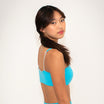
For everyday smoothness, the seamless route wins most often. A reversible, tag-free style like the Bleum Bra delivers that flat, disappears-under-everything feel without lace to scratch or a halter strap to dig in. It is double-lined in 90% polyester with 10% spandex, $24, sizes 6 to 24, and its fabric is STANDARD 100 by OEKO-TEX certified. Browse the everyday bralettes and bras collection to see it alongside the rest of the range.
5. The 30-Second Bralette Fit Test to Run at Home
Looks in the mirror do not predict how a bralette holds up once real life starts. The fix takes half a minute in a bedroom, no store trip required. Three movements do the work.
Arms up first. Reach for the ceiling and watch the band. It should stay put along the ribs, with coverage holding steady rather than sliding up to expose the underband. Next, a big self-hug. Wrap the arms across the front and notice anything that pinches, scratches, or shifts. Last, twist and lean side to side. A good bralette keeps its bottom edge flat instead of rolling, and the front stays close rather than gapping.
Good fit is something she feels, not just sees. The band sits snug without squeezing, straps stay up without carving into the shoulders, and the whole thing fades into the background instead of demanding attention every ten minutes.
When a check fails, the symptom points to the fix. A band that rolls usually wants a different cut, often a longline, or a small size adjustment. Straps that slip mean a different strap placement or a size down. Gapping at the front calls for a different coverage or cup shape, not a tighter band.
6. How to Measure at Home and Choose Between Two Sizes
Two numbers settle most of the guesswork. First, wrap a soft tape around the ribcage just under the bust, snug and level, and take the reading on a normal exhale rather than a held breath. Second, measure around the fullest part of the chest with the tape parallel to the floor, resting rather than squeezing. Note both on a phone, then re-check every six months or so. Girls this age grow in bursts, so a number that fit in spring can drift by autumn.
Those figures point toward a size. Since Bleuet works in T-shirt sizing rather than band-and-cup math, the read is more direct. Landing between two sizes calls for a quick diagnosis. When the straps seem to be doing all the holding, the band likely needs a closer fit, so the smaller option usually wins. When the band already feels settled but more coverage would help, a style with a touch more structure answers better than sizing up.
For the full walkthrough, the first bra sizing and size chart guide lays it out step by step. One rule outranks the tape: choose the option that stays comfortable and stays put over the one that matches a number on paper.
7. Sports Bralettes: Matching Support to How Hard She Moves
Support runs on a spectrum, and where a girl lands depends on what her body is actually doing. Lounging asks for almost nothing. A cartwheel across the gym, a sprint down the field, or a jump-and-spin in dance class asks for far more. This is also where a lounge bralette hits its ceiling: Aerie describes the Superchill as medium support and made to lounge, which is honest labelling and a clear signal it is not a practice bra.
A higher-support pick earns its place through a few specifics. A wider, sturdier underband anchors everything so it does not creep upward mid-movement. Stable straps hold their position instead of sliding off a shoulder during a routine. Enough compression keeps bounce in check, and coverage that stays put when arms fly overhead means no tugging between drills.
One test settles the question at home: ten jumping jacks followed by a slow forward fold. Nothing should shift, ride up, or rub across either move. If the band climbs or a strap wanders, the support level is too low for the activity.
If she does not, sewn-in solves it permanently. The Bleum Petal Padded Bra is built that way, and Bleuet's own description is blunt about why: sewn-in pads that actually survive the wash. It is reversible two-in-one, seamless, tagless and wire-free, at $25 in sizes 7/8 to 24, which is $9.95 less than the Aerie bralette and covers a size range Aerie's alpha sizing does not address.
For a girl pulled out of the moment by anything scratchy or fidgety, that steadiness matters more than the adjustability does. No loose inserts to rub, no tag to itch, and a smooth front that stays put through a full school day.
4. Bralette Styles Decoded: Seamless, Lace, Halter, and Longline
Style names read like a menu, and none explain how the piece will behave on a growing girl. Four come up most often, and each earns its place in some situations while causing quiet trouble in others.
-
Seamless or smooth bralettes sit closest to invisible under a T-shirt. Smooth construction and no fussy edges suit sensory comfort and the forget-it-is-there wear a tween wants on a school morning. Watch for fabric that runs too thin when more coverage is the goal.
-
Lace bralettes bring style and, when the lace is genuinely soft, real breathability. The catch is scratch factor. Stiffer lace irritates at the edges and delicate trim wears out faster, so gentler washing keeps it wearable longer.
-
Halter bralettes solve certain necklines and pair nicely with cuter outfits. Over a full school day, though, the weight pulls onto the neck and shoulders, and strap rub becomes what she notices by lunchtime.
-
Longline bralettes add band stability and a smoother line under fitted tops. If the size is off or the fabric stiff, the hem rolls up and bunches at the ribs.

For everyday smoothness, the seamless route wins most often. A reversible, tag-free style like the Bleum Bra delivers that flat, disappears-under-everything feel without lace to scratch or a halter strap to dig in. It is double-lined in 90% polyester with 10% spandex, $24, sizes 6 to 24, and its fabric is STANDARD 100 by OEKO-TEX certified. Browse the everyday bralettes and bras collection to see it alongside the rest of the range.
5. The 30-Second Bralette Fit Test to Run at Home
Looks in the mirror do not predict how a bralette holds up once real life starts. The fix takes half a minute in a bedroom, no store trip required. Three movements do the work.
Arms up first. Reach for the ceiling and watch the band. It should stay put along the ribs, with coverage holding steady rather than sliding up to expose the underband. Next, a big self-hug. Wrap the arms across the front and notice anything that pinches, scratches, or shifts. Last, twist and lean side to side. A good bralette keeps its bottom edge flat instead of rolling, and the front stays close rather than gapping.
Good fit is something she feels, not just sees. The band sits snug without squeezing, straps stay up without carving into the shoulders, and the whole thing fades into the background instead of demanding attention every ten minutes.
When a check fails, the symptom points to the fix. A band that rolls usually wants a different cut, often a longline, or a small size adjustment. Straps that slip mean a different strap placement or a size down. Gapping at the front calls for a different coverage or cup shape, not a tighter band.
6. How to Measure at Home and Choose Between Two Sizes
Two numbers settle most of the guesswork. First, wrap a soft tape around the ribcage just under the bust, snug and level, and take the reading on a normal exhale rather than a held breath. Second, measure around the fullest part of the chest with the tape parallel to the floor, resting rather than squeezing. Note both on a phone, then re-check every six months or so. Girls this age grow in bursts, so a number that fit in spring can drift by autumn.
Those figures point toward a size. Since Bleuet works in T-shirt sizing rather than band-and-cup math, the read is more direct. Landing between two sizes calls for a quick diagnosis. When the straps seem to be doing all the holding, the band likely needs a closer fit, so the smaller option usually wins. When the band already feels settled but more coverage would help, a style with a touch more structure answers better than sizing up.
For the full walkthrough, the first bra sizing and size chart guide lays it out step by step. One rule outranks the tape: choose the option that stays comfortable and stays put over the one that matches a number on paper.
7. Sports Bralettes: Matching Support to How Hard She Moves
Support runs on a spectrum, and where a girl lands depends on what her body is actually doing. Lounging asks for almost nothing. A cartwheel across the gym, a sprint down the field, or a jump-and-spin in dance class asks for far more. This is also where a lounge bralette hits its ceiling: Aerie describes the Superchill as medium support and made to lounge, which is honest labelling and a clear signal it is not a practice bra.
A higher-support pick earns its place through a few specifics. A wider, sturdier underband anchors everything so it does not creep upward mid-movement. Stable straps hold their position instead of sliding off a shoulder during a routine. Enough compression keeps bounce in check, and coverage that stays put when arms fly overhead means no tugging between drills.
One test settles the question at home: ten jumping jacks followed by a slow forward fold. Nothing should shift, ride up, or rub across either move. If the band climbs or a strap wanders, the support level is too low for the activity.

For dance, gymnastics, and cheer, the Lotus Sports Bra has a wide supportive underband for high-impact hold, adjustable straps with a J-hook for a racerback option, and a built-in lightly padded spacer mesh layer. It is brushed 67% nylon with 33% spandex plus a 100% polyester mesh layer, $36, sizes 12 to 24. For general practices and busy multi-sport weeks, the Bleum Active Bra uses soft moisture-wicking performance fabric that fits seamlessly under a shirt, jersey or tank, at $24.
Where to Start Shopping for a First Bralette
Every girl arrives at this milestone from a slightly different place. Three quick paths point straight to the right starting style.
-
When the need is a first everyday bra, and soon. Start with the simplest default in the range. The Bleum Bra pulls on, disappears under a shirt, and asks nothing of a first-time wearer, which makes it the easiest yes for a girl who just needs something that works Monday morning.
-
When comfort outranks everything, and scratchy is a dealbreaker. Reach for the Petal build: sewn-in pads that stay put, a smooth front, and a tag-free layer that fades into the background for a sensory-sensitive wearer.
-
When she is active most days: sports, dance, or PE. Match the support to the movement rather than guessing, using the jumping-jack test above.
A bra that fits right should feel secure without squeezing, soft enough to forget, and made for a girl's age rather than borrowed from an older range. That combination turns a first bralette from a chore into an easy yes.
Frequently Asked Questions
Does Aerie make bralettes for tweens?
Aerie describes its own bra range as being for every woman, and its bralettes are sized in women's alpha sizing rather than youth sizing. There is no separate tween line. For an older teen the fit may work; for an eleven-year-old, strap length and cup coverage are graded for a taller frame, which is what produces the gapping and slipping parents report.
What is the Aerie bralette size chart like?
Aerie sizes its bralettes in women's alpha sizes, which describe a women's fit block rather than a youth one. That is the core mismatch for a younger girl: the letters exist, but they map to proportions she does not have yet. Bleuet instead uses numeric T-shirt sizing from 6 to 24, so the size she wears in a top is the size she wears in a bra.
Should a bralette be sized up so it lasts through growth spurts?
Sizing up to stretch the life of a bralette usually backfires. A band cut too big rides up over the ribs and leaves coverage sliding around all day, which is the opposite of what a growing girl wants. Fit the body she has now, prioritizing a band that stays put, and re-measure every six months or so to catch the next jump before it shows.
What if she lands between two sizes?
Start with the band. If the straps seem to carry all the weight, the band needs a closer fit, so the smaller size usually wins. If the band already feels settled but a little more coverage would help, a cut with slightly more structure answers better than jumping up a size.
Why does a bralette feel fine at home but annoying at school?
Home wear stays still, while a school day brings hours of sitting, reaching, and moving that reveal what a mirror hides. Strap rub, a rolling hem, and a band that shifts only announce themselves once a girl is stuck at a desk through fourth period. Running the movement test at home surfaces those problems before they become a distraction in class.
How should bralettes be washed to keep their shape?
Wash on a cold, gentle cycle inside a delicates bag, then lay flat or hang to air-dry. High heat is the real enemy, breaking down the stretch elastic and the softness that makes a bralette worth wearing. Skipping the dryer protects both the shape and the soft feel a growing girl notices.
Leave a comment